Hazardous Material Escort Robot












Smart Empowerment for Sanxiang | RACETEC Showcases Its OpenHarmony-Based Work Safety Management Solution at the Hunan HarmonyOS Ecosystem All-Scenario Digital Industry Matchmaking Conference
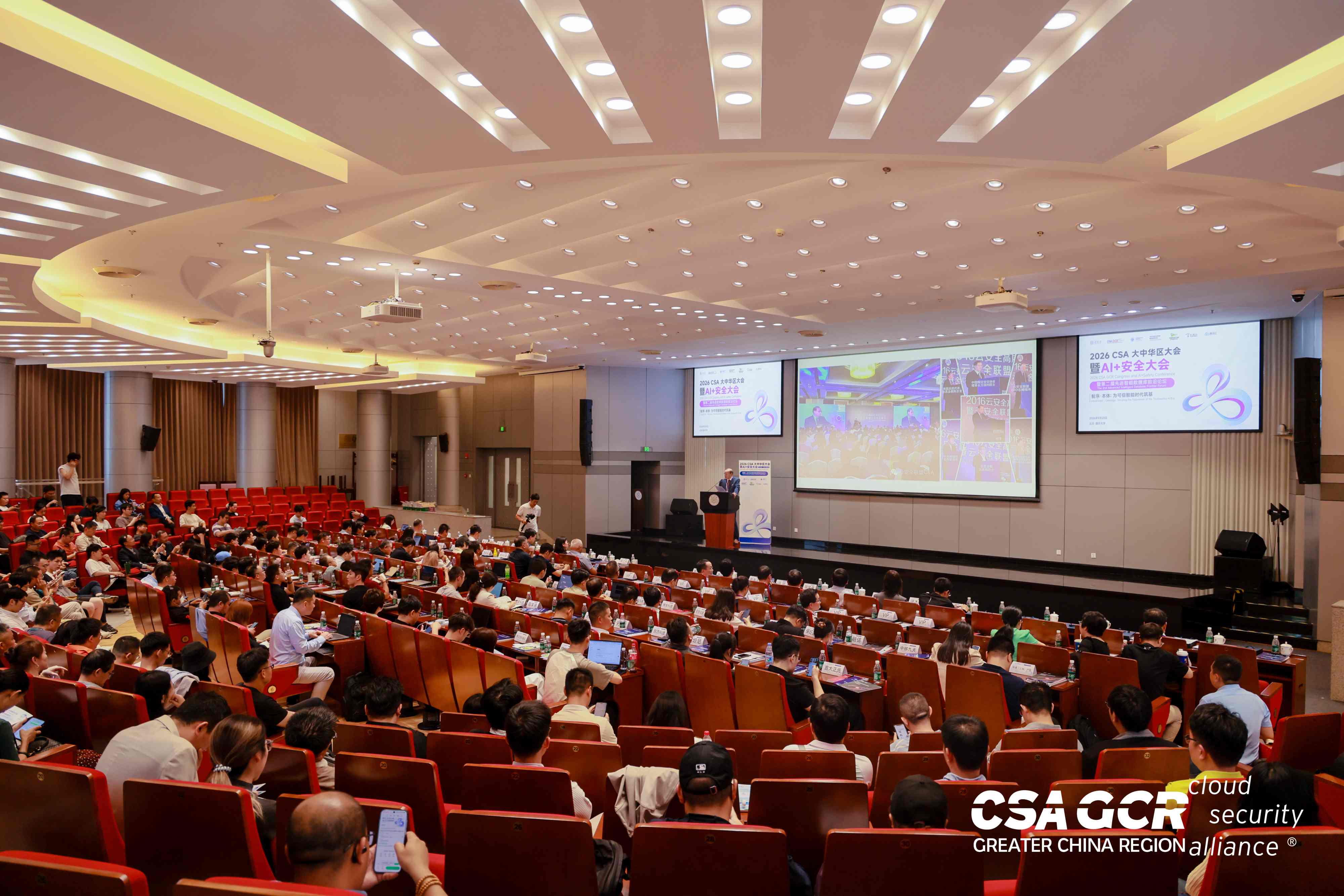
On September 23, the 2026 CSA Greater China Conference & AI+Security Conference, themed "Intelligent Order · Essential Substance — Building the Foundation for a Trustworthy Intelligent Era", was held in the rear hall of the Main Building of Tsinghua University, Beijing. Co-hosted by the Beijing National Research Center for Information Science and Technology (BNRist), Tsinghua University, and the Cloud Security Alliance Greater China Region (CSA GCR), the conference brought together representatives from industry, academia, and research institutions, focusing on three major directions — AI-native infrastructure, international AI governance and security standards, and the international trustworthy AI talent ecosystem — to jointly explore how to build the security foundation for a trustworthy intelligent era. Xu Jinwu, CEO of RACETEC, led the company's delegation to the conference.
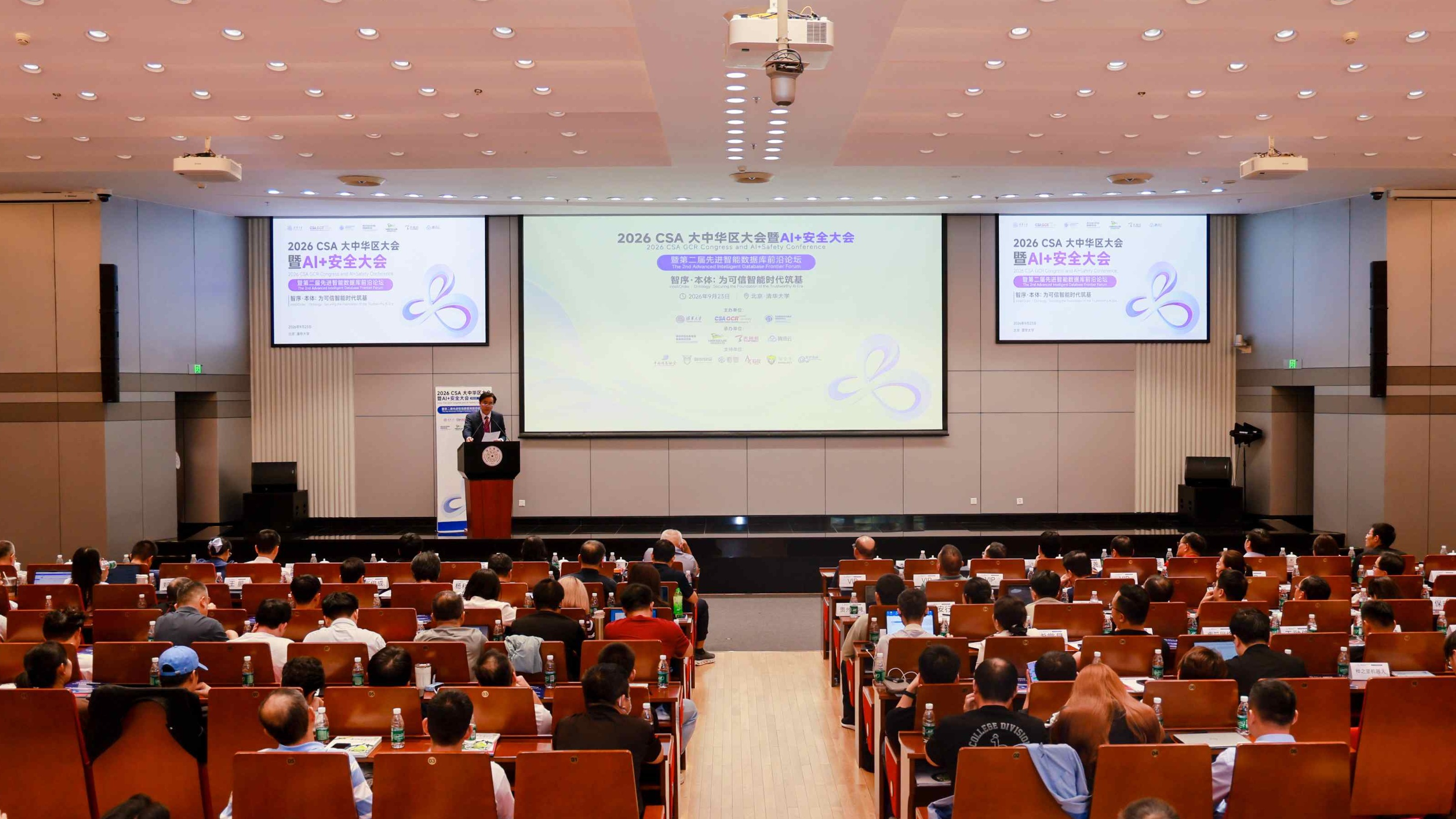
At the conference, the 2026 AI+Security Innovation Practice Casebook was officially released. RACETEC's submission, "Practice on End-Cloud Collaborative AI Infrastructure Security Protection Based on the OpenHarmony Native Security Foundation — A Case Study of the Intelligent Electronic Escort System for Dangerous Goods Transport", was successfully selected.
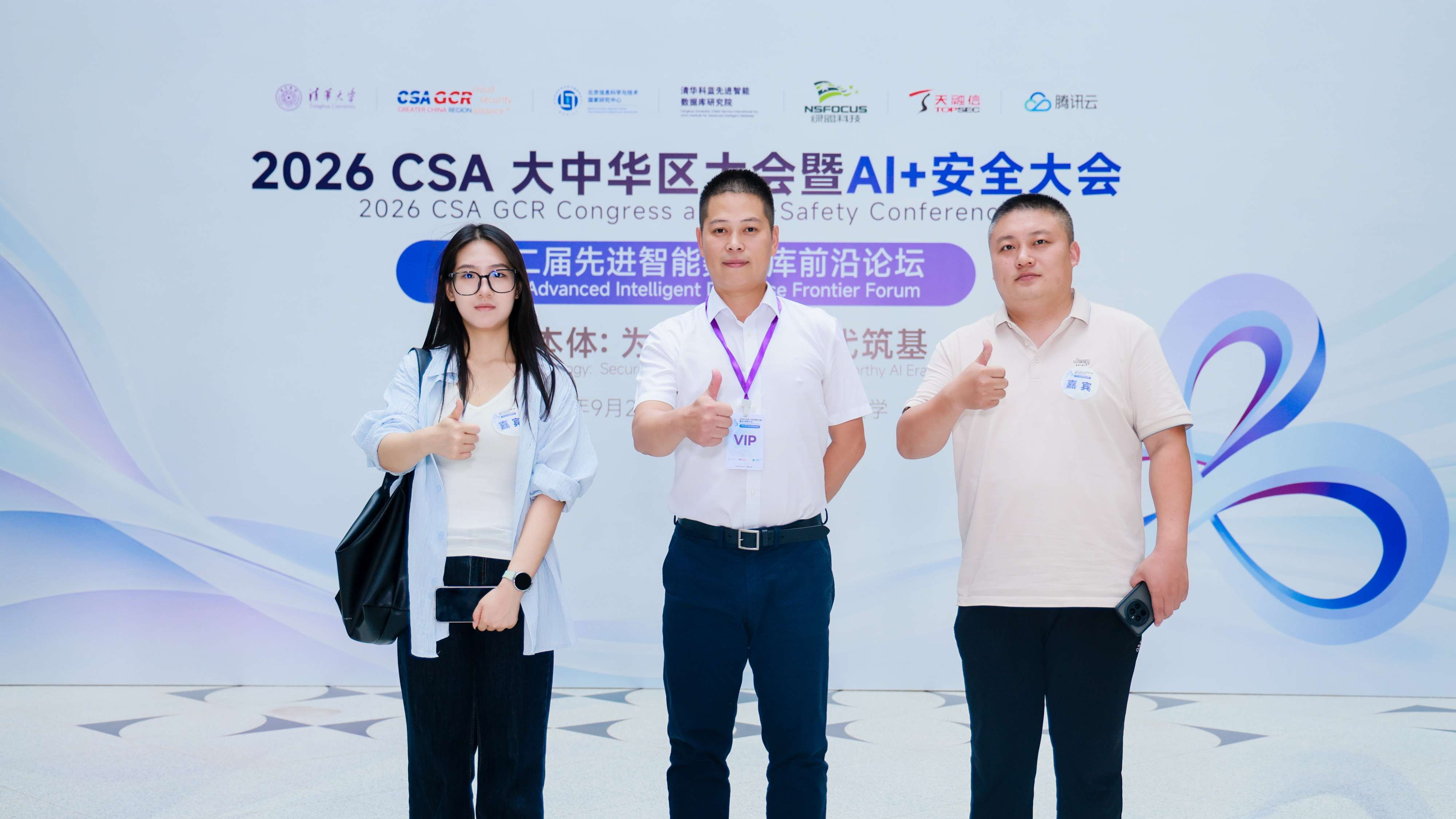
Intelligent Order · Essential Substance: Building the Defense Line at the "Source" of AI
Built on Tsinghua University's academic foundation and CSA's global security standards practice, this year's conference directed the discussion toward a fundamental question: when AI evolves from a "tool" to a "partner" and from "assistance" to "decision-making," where exactly should the security defense line be built?
In the theme, "Intelligent Order" points to the orderly governance of AI — an urgent call for sound and healthy AI governance frameworks and rules, and a sincere expectation of well-ordered governance outcomes. "Essential Substance" points to a return to the true nature of business and a dive into the technical core — anchoring the mechanisms and boundaries of AI "trustworthiness" and "security" from the logical foundation of business itself. Together, they constitute the complete path to "building the foundation for a trustworthy intelligent era."
During the conference, Wu Jiangxing, Academician of the Chinese Academy of Engineering; Xing Chunxiao, Professor at Tsinghua University; Zhang Peng, CEO of Z.AI (Zhipu AI); Chen Haibo, Huawei Fellow and Chief Scientist of Basic Software; as well as experts from Topsec, NSFOCUS, Tencent Security, the China Electronics Standardization Institute (CESI), and the CSA GCR Research Institute, delivered speeches on topics including large model security, AI-native data infrastructure, and offensive-defensive baselines and governance frameworks in the agent era. The conference concluded with a roundtable discussion titled "Future Talent, Talent for the Future," jointly deliberating on the cultivation path of interdisciplinary security talent in the AI era.
The core consensus throughout the conference: AI security is moving from "surface-level defense" to "source-level reinforcement." In the past, when discussing AI security, the prevailing approach was "bolt-on defense" — adding content filters to AI, deploying monitoring plugins, and patching vulnerabilities after they emerged. But as AI begins to autonomously execute tasks and participate in critical decisions, this approach proves insufficient. The real solution lies in building security capabilities into the very "substance" of AI infrastructure.
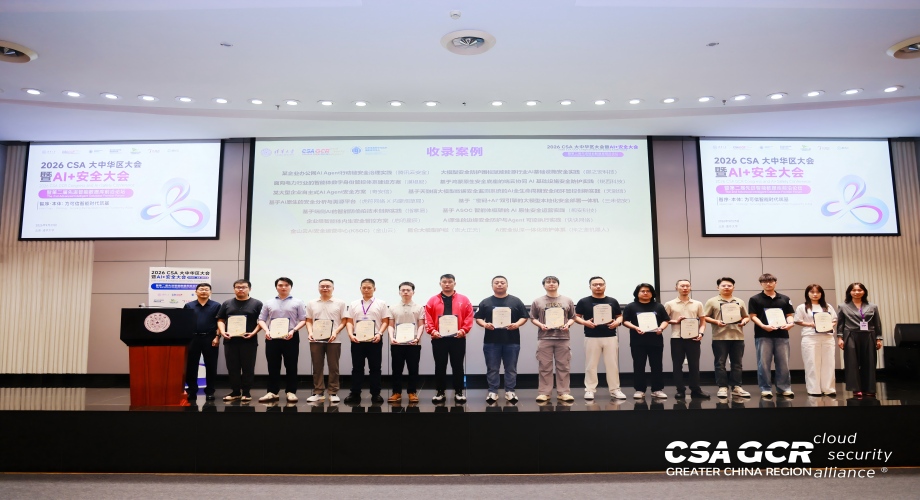
From 17:50 to 18:00, the session "Results Release & Certificate Presentation: 2026 AI+Security Innovation Practices" brought the conference to its climax. The case solicitation was open to enterprises and organizations across society, focusing on outstanding practices in AI innovative applications and security capability building, covering the planning, construction, operation, governance, and application phases of the full AI lifecycle — aiming to provide reusable industry experience, support standards development, and empower industrial growth.
Following expert review, the selected cases were compiled into the 2026 AI+Security Innovation Practice Casebook, officially released at the conference, with certificates presented to the selected organizations by the organizers. Xu Jinwu, CEO of RACETEC, took the stage on behalf of the company to receive the award.
The Selected Case: Building Security into the "Substance" of AI Infrastructure
This year's casebook has consistently prioritized "reusable real-world experience." RACETEC's selected case is precisely a snapshot of "balancing security and engineering excellence."
The "Impossible Triangle" of On-Device AI Security
Dangerous goods transport is one of the scenarios in workplace safety with the heaviest regulatory pressure and the lowest tolerance for error. As AI foundation models move from the cloud to the edge and from general-purpose to vertical domains, the on-device inference platform deployed by the intelligent electronic escort system on vehicle-mounted and wearable terminals faces the compounding reality of three constraints: terminal computing power is limited, yet high-performance inference, defense against adversarial attacks, and protection against model theft must be achieved simultaneously; multimodal data — video, audio, sensor readings, and driver behavior — is continuously collected throughout transport, containing sensitive information such as faces, employee IDs, location coordinates, and transport routes; and vehicles pass through network-free areas such as tunnels and mountainous regions, where security protection cannot rely on real-time cloud monitoring. The traditional "deploy the system first, bolt on security software later" approach of external protection can no longer hold up against the startup vacuum window, policy delivery latency, and the need for fine-grained control.
A Five-Layer Technical Path: Security Born with the OS, Trained with the Model
To address these challenges, RACETEC leverages RUMINATE OS — its native operating system built on OpenHarmony — as the security foundation, constructing an end-network-cloud, full-chain AI infrastructure security protection system that makes security "born with the operating system and trained with the model":
At the operating system layer, the SDP-Native architecture — designed for Internet of Everything (IoE) scenarios — embeds Software-Defined Perimeter (SDP) secure access capabilities into the kernel, ensuring AI inference interfaces are protected from the very first moment the system starts, eliminating the "security vacuum window";
At the model layer, adversarial training is injected into the knowledge distillation and fine-tuning process from the RACEMIND General-Purpose Foundation Model to the CAPMIND Vertical Large Model, enabling on-device lightweight models to directly "inherit" adversarial robustness — without separately trained security modules and with low additional inference overhead;
At the data layer, federated learning and differential privacy achieve "data never leaves the domain; usable but invisible" — on-device desensitization and local encrypted storage are completed at the terminal, with edge nodes uploading only noise-added gradients to the cloud for aggregation;
At the application layer, model digital watermarking, boot integrity verification, and inference sandbox isolation protect model intellectual property;
At the runtime layer, on-device security policy caching and lightweight detectors support full-featured operation under weak networks and short-term offline conditions, automatically syncing security logs once connectivity is restored.
This aligns closely with the methodology championed by the conference — "starting from the true nature of business and embedding security throughout the AI lifecycle." Security is no longer an after-the-fact patch; it is an inherent property of AI infrastructure.
Large-Scale Deployment Results
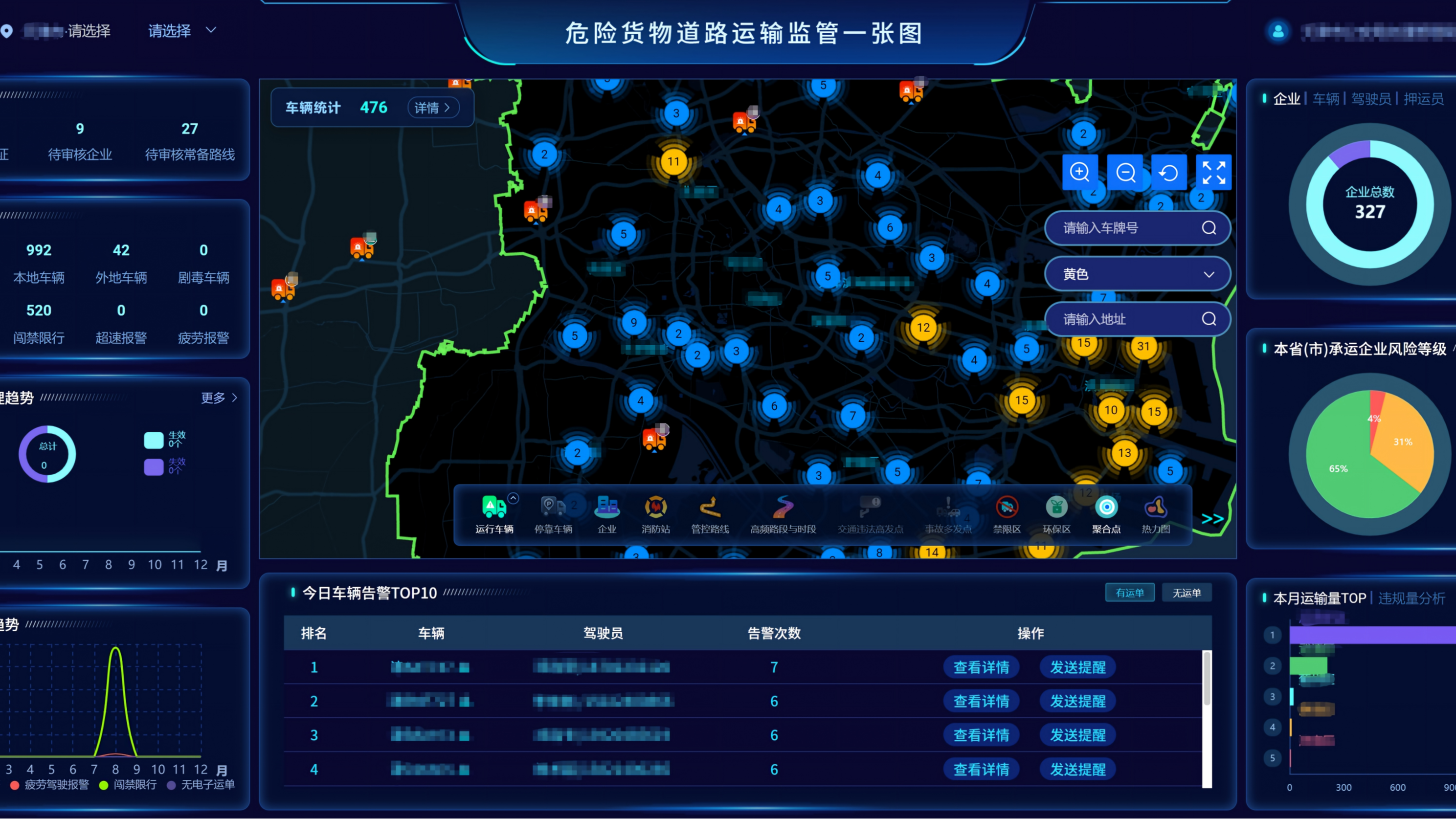
To date, this system has been deployed at scale on the dangerous goods road transport safety supervision and service platform of a province in southwest China, achieving full coverage of dangerous goods transport vehicles, drivers, and escort personnel; supporting the full-process online flow of electronic waybills and an electronic escort model that enables province-wide travel with a single certificate. In terms of operational outcomes, the regional dangerous goods transport accident rate has declined significantly year over year, and the vast majority of high-risk vehicles can be automatically identified, intercepted, and alerted — advancing safety control from "post-incident tracing" to "pre-incident prevention." In terms of security capability, on-device adversarial attack detection and model watermark verification both maintain high accuracy, while the impact of security protection on terminal inference performance is kept at a low level — balancing security strength with business experience.
From Dangerous Goods Transport to a Replicable Industry Safety Paradigm
The value of this case lies not only in its results within a single scenario, but in its replicability. RACETEC has established a modular architecture of "(OpenHarmony foundation + AI platform + security suite) × N industry scenarios": security capabilities are delivered as standardized APIs, independent of specific hardware or a single scenario, and enterprises can trim security modules on demand based on their device computing power — adversarial detection, integrity verification, and sandbox isolation can each be enabled independently. Today, this architecture shows high reusability across transportation, energy, mining, construction, government, and other scenarios, offering a reference path for securing intelligent terminals in the work safety industry.
Beyond the technical path, the case also distills four transferable lessons: Security shift-left with native integration — implanting security capabilities from the OS kernel and model training stages; federated learning plus differential privacy — establishing an AI training paradigm where "data never leaves its domain"; zero-trust architecture enabling cross-departmental secure data sharing — achieving "on-demand sharing, dynamic authorization, and full audit trail"; and modular security architecture with on-demand trimming and lightweight adaptation — fitting one security architecture to multiple terminal types.
Built on OpenHarmonyOS · Driven by AI · Guarded by Safety
Since its founding in 2016, RACETEC has consistently adhered to its business strategy of "Built on OpenHarmonyOS · Driven by AI · Guarded by Safety", deeply cultivating the OpenHarmony ecosystem, independently developing the RUMINATE OS, and building an AI capability platform centered on the RACEMIND General-Purpose Foundation Model and the CAPMIND Vertical Large Model — forming a full-stack technical closed loop of "hardware–OS–platform–applications," with a digital security system built on a zero-trust architecture at its core. The company has been recognized as a National High-Tech Enterprise and an SRDI Enterprise.
Inclusion in the 2026 AI+Security Innovation Practice Case Collection marks another industry recognition of RACETEC's integrated "OpenHarmony + AI + Security" practice path. Previously, RACETEC won the CSA 2025 Security Innovation Award, and CEO Xu Jinwu was invited to share insights on AI security talent development at the CSA summit roundtable. Looking ahead, the company will continue to join hands with industrial chain partners and industry organizations to drive the large-scale adoption of homegrown secure digital-intelligent solutions in key sectors such as transportation, government, energy, and chemicals — laying a solid security foundation for the era of trusted intelligence and safeguarding the steady, far-reaching digital-intelligent transformation of critical industries.
Share