Hazardous Material Escort Robot











Smart Education
Solutions
From "Isolated-Device Traditional Classrooms" to "Sensing-Collaborative OpenHarmony Smart Education Ecosystem"
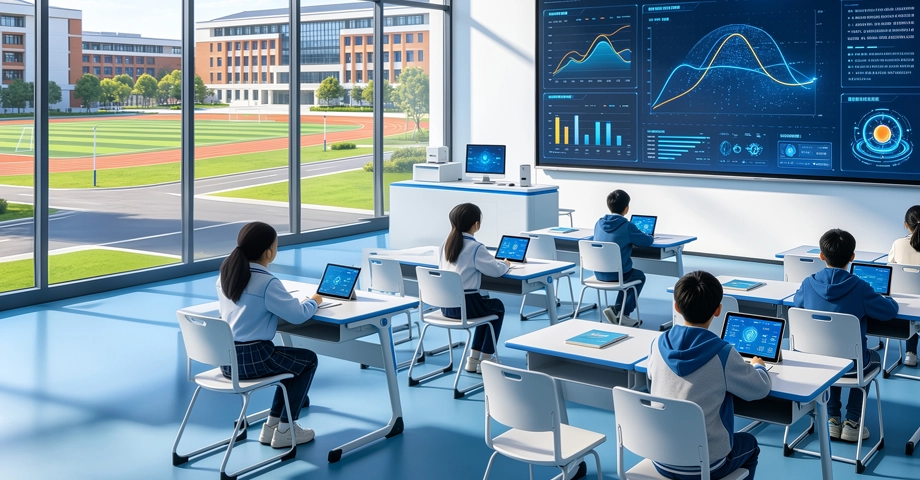
Built on OpenHarmony and AI Agents, leveraging device-edge-cloud collaboration, multi-modal sensing, and distributed interconnection technologies, we provide the education industry with full-chain data closed-loop capabilities for "teaching, learning, assessment, management, and research" along with scenario-adaptive capabilities — ultimately achieving the goal of building a secure, autonomous and controllable, learner-centric hyper-personalized lifelong learning ecosystem.
Industry Pain Points vs RACETEC Solutions
Teaching Interaction & Experience
Campus Safety & Management
Device O&M & Energy Consumption
Data Value & Ecosystem
Teaching Interaction & Experience
Traditional Industry Pain Points

Limited interaction, fragmented data:
·Traditional multimedia devices (projectors, whiteboards, speakers) operate independently, with cumbersome operation and time-consuming switching.
·Teacher-student interaction is limited to hand-raising or simple Q&A, lacking real-time feedback and making it difficult to capture student attention and comprehension.
Uniform teaching content cannot be dynamically adjusted based on individual student differences.
RACETEC Innovative Solution

Multi-terminal collaboration, precision teaching:
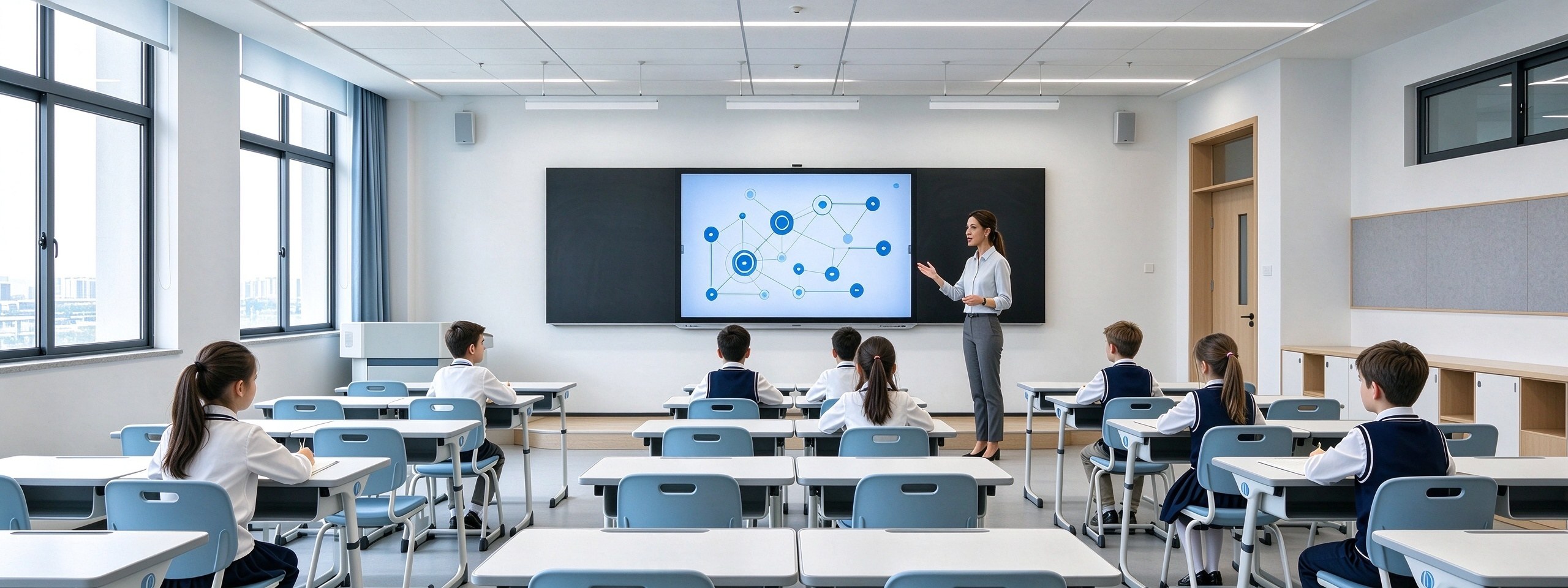
·Super Device interconnection: Leverages OpenHarmony Distributed Soft Bus to enable one-tap connection and seamless flow between podium PCs, student tablets, electronic whiteboards, and speakers; teachers can drag and drop content to any screen.
·Multi-modal sensing: Through camera and sensor fusion, analyzes classroom atmosphere and student attention in real time, with AI agents instantly generating learning analytics reports.
·Adaptive learning: Based on student profiles, AI automatically recommends personalized exercises and resources, achieving "tailored-to-each-student" precision teaching.
Campus Safety & Management
Traditional Industry Pain Points
Passive monitoring, delayed response:
·Security relies on manual monitoring review or post-incident tracing; abnormal behaviors like fighting, falls, and unauthorized intrusions cannot be warned in real time.
·Attendance relies on roll calls or card swipes, with proxy attendance issues, and cannot track students' real-time campus trajectories and status.
·Trol, and other systems operate independently and cannot coordinate evacuation in emergencies.
RACETEC Innovative Solution
Proactive defense, full-domain sensing:
·AI behavior recognition: Deploys on-device AI algorithms for real-time recognition and automatic alarming of fighting, falls, overcrowding, and restricted-area intrusions — shifting from "post-incident investigation" to "in-process intervention."
·Frictionless attendance & trajectory: Combines face recognition and IoT sensing to enable frictionless entry/exit attendance and visualization of campus activity trajectories, ensuring student safety and controllability.
·Emergency linkage: In emergencies like fires, the system automatically triggers access control unlock, broadcast guidance, and lighting indicators — building a three-dimensional security protection network.
Device O&M & Energy Consumption
Traditional Industry Pain Points
Difficult maintenance, high energy consumption:
·Fragmented device brands and multiple protocols make troubleshooting difficult, relying on manual inspections and incurring high O&M costs.
·Classroom lights and air conditioners are often left on due to forgetfulness, causing severe energy waste.
·Lack of a unified management platform prevents remote batch upgrades or device control.
RACETEC Innovative Solution
Intelligent O&M, green & energy-saving:
·Unified management & self-healing: Based on OpenHarmony unified access standards, achieves unified visibility, manageability, and control of heterogeneous devices; device faults are automatically reported with self-healing attempts, significantly reducing O&M labor.
·Scenario-based energy saving: Through light and occupancy sensor integration, achieves "lights on when people arrive, lights off when they leave" and smart AC temperature adjustment, significantly reducing classroom energy consumption.
·Remote centralized control: Supports remote batch on/off, software upgrades, and status monitoring for all campus devices, improving management efficiency.
Data Value & Ecosystem
Traditional Industry Pain Points
Data silos, closed applications:
·Teaching, management, and security data are scattered across different systems, preventing integrated analysis and making it difficult to support scientific decision-making.
·Closed ecosystems make new application development difficult and slow to adapt, failing to meet the rapid innovation needs of education scenarios.
RACETEC Innovative Solution
Data integration, open ecosystem:
·Full-chain data closed loop: Connects data across teaching, learning, management, and assessment to build an education big data center — providing managers with scientific decision-making basis and teachers with precision teaching research support.
·Open-source open ecosystem: Built on the OpenHarmony foundation, provides rich APIs and development tools, attracting developers to co-build the education application ecosystem and rapidly respond to scenario innovation needs.

Core Value
Smart Education Overall Business Architecture
Deployment Scenarios

K-12 Basic Education

Higher Education

Vocational Education

Education Management & Services