Hazardous Material Escort Robot










Smart Government
Services
"From "One-Way Counter Service" to "Shoulder-to-Shoulder Collaborative Intelligent Service"
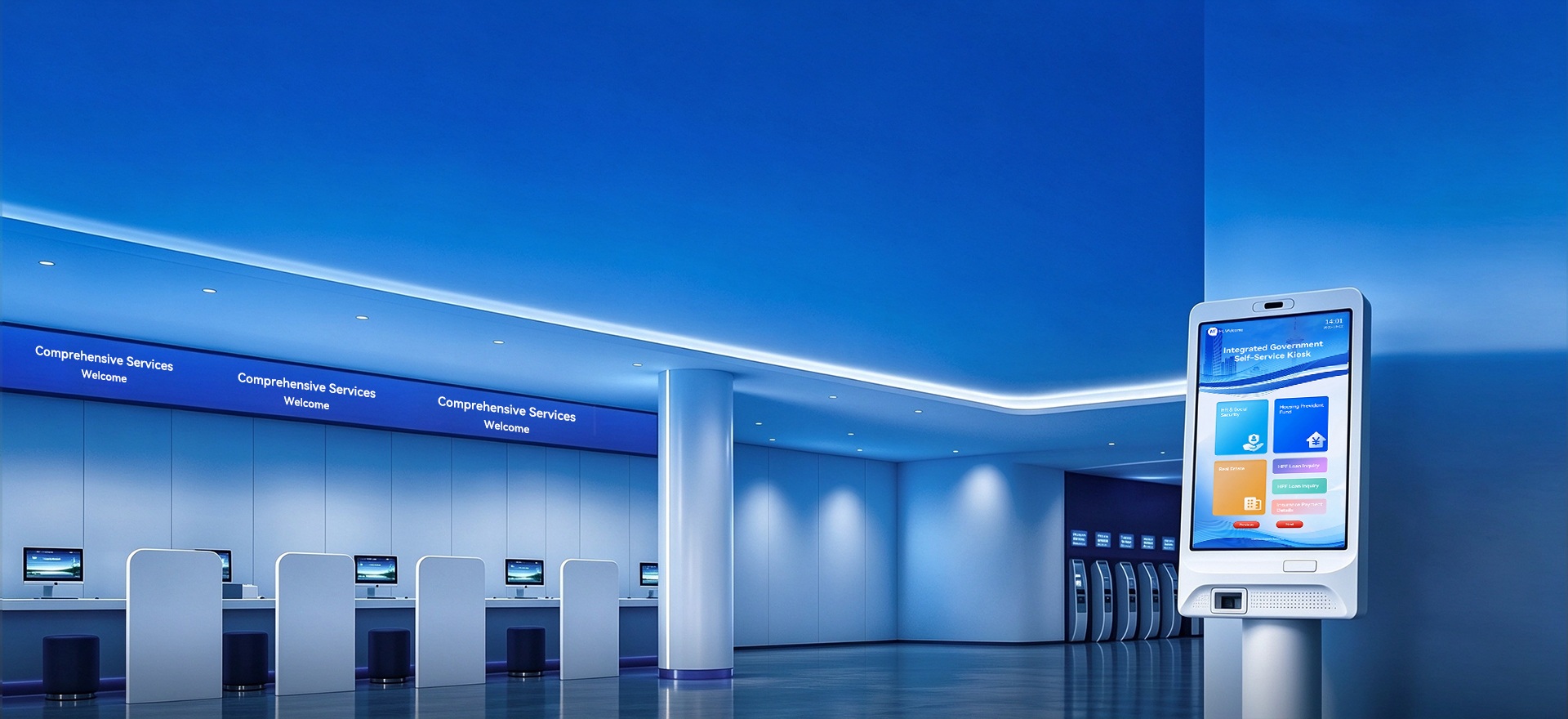
Built on OpenHarmony and AI Agents, leveraging Distributed Soft Bus and intelligent form-filling engine technologies, we provide the industry with self-controllable, seamlessly collaborative, and user-friendly full-stack government service capabilities — ultimately achieving a three-dimensional upgrade in experience, efficiency, and security.
Industry Pain Points vs. RACETEC Solutions
Cross-Departmental Material Collaboration
Counter Face-to-Face Service
Complex Form Filling & Verification
Services in Remote Communities
Cross-Departmental Material Collaboration
Traditional Industry Pain Points

Isolated devices, repeated submissions: Citizens must repeatedly submit paper materials across different windows or devices, with unsynchronized data and no cross-device service continuity, resulting in "multiple trips, repeated form-filling."
RACETEC Innovative Solution

OpenHarmony Distributed Soft Bus + NearLink technology: Enables one-time material upload with high-speed cross-device synchronized flow. Multi-terminal interconnection, real-time sync of forms and records, breaking down device barriers to achieve "submit once, use across all devices."
Counter Face-to-Face Service
Traditional Industry Pain Points
Counter barriers, inefficient communication: Traditional physical counter separations cause poor communication; manual assistance relies on verbal descriptions, prone to misunderstandings, and lacks real-time visual support, resulting in poor citizen experience.
RACETEC Innovative Solution
"Shoulder-to-Shoulder" same-table collaborative terminal: Uses domestic terminals for real-time interface sharing, supporting two-way annotation and voice interaction. Staff and citizens operate "side by side" at the same table for precise assistance, breaking physical and psychological barriers and significantly improving satisfaction.
Complex Form Filling & Verification
Traditional Industry Pain Points
Cumbersome forms, high error rates: Manual filling is time-consuming and error-prone; non-standard formats or logical errors often lead to application rejection, requiring multiple trips for revisions and long waiting times.
RACETEC Innovative Solution
AI intelligent form-filling engine + real-time compliance verification: Integrates with the government middle platform for automatic field pre-filling (high-accuracy core information matching), with a built-in massive knowledge base for real-time error correction. Supports multi-modal input including handwriting and voice, significantly reducing error rates and achieving "first-try approval."
Services in Remote Communities
Traditional Industry Pain Points
Centralized services, long travel distances: Government services are concentrated in halls, making it difficult for residents in communities and remote areas to access services; services are unavailable offline, leaving a "last-mile" coverage gap.
RACETEC Innovative Solution
Lightweight terminal deployment + offline caching technology: Deploys convenience service terminals to communities, supporting most high-frequency services. Features offline caching capability, allowing operation even without network, with automatic sync upon reconnection — truly achieving "services at your doorstep."

Core Value
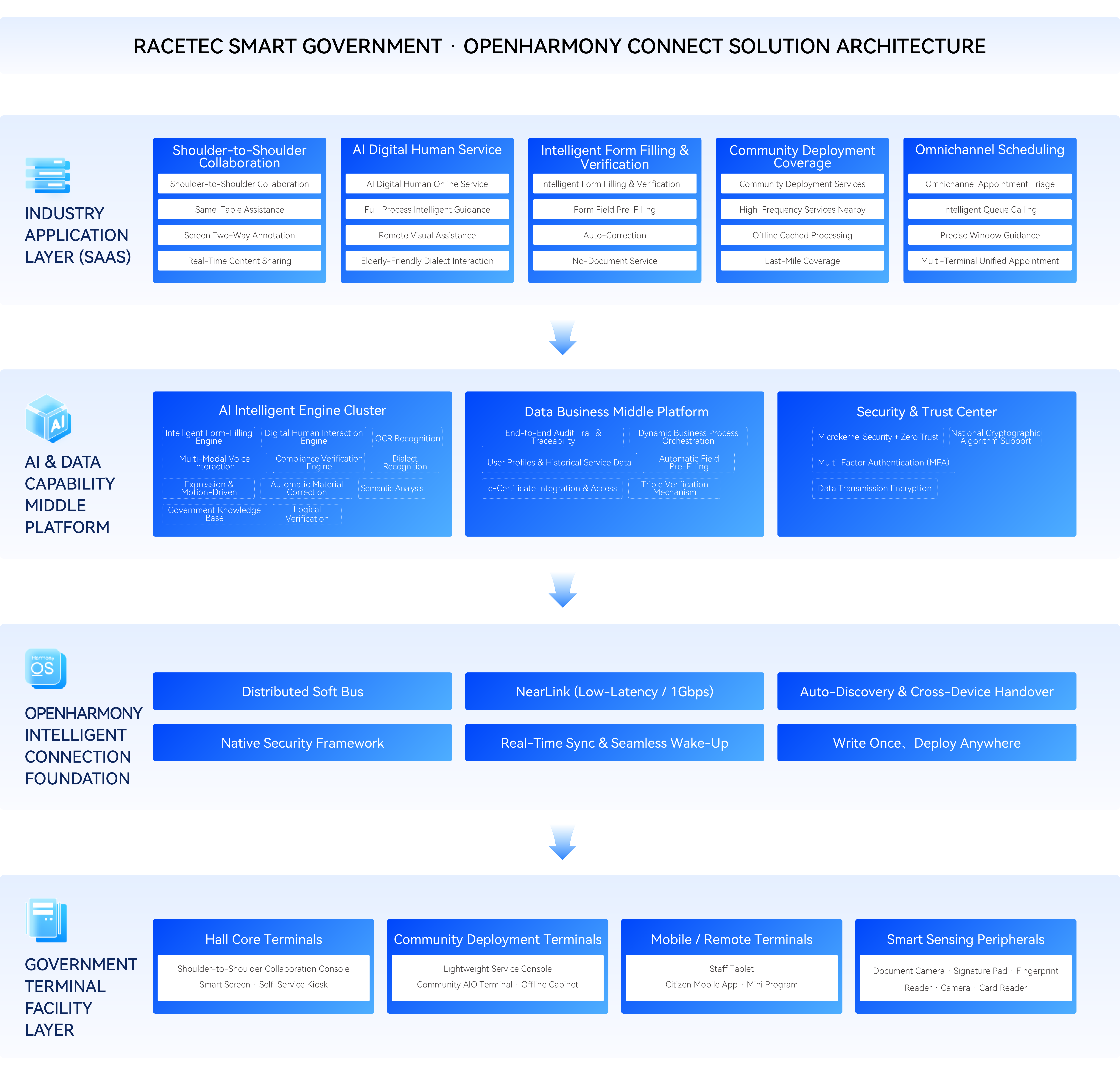
Smart Government Architecture Diagram
Deployment Scenarios
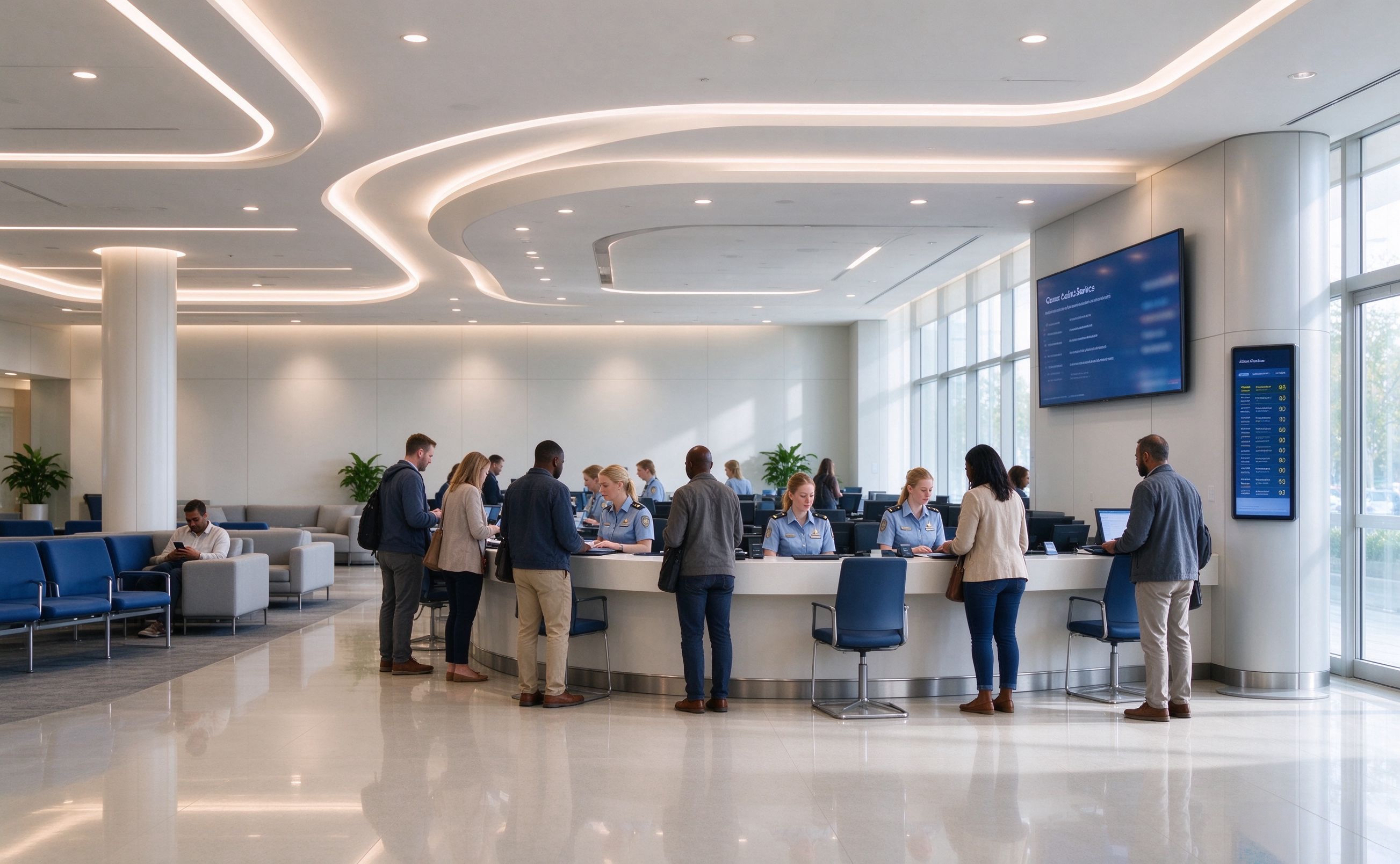
Government Service Hall

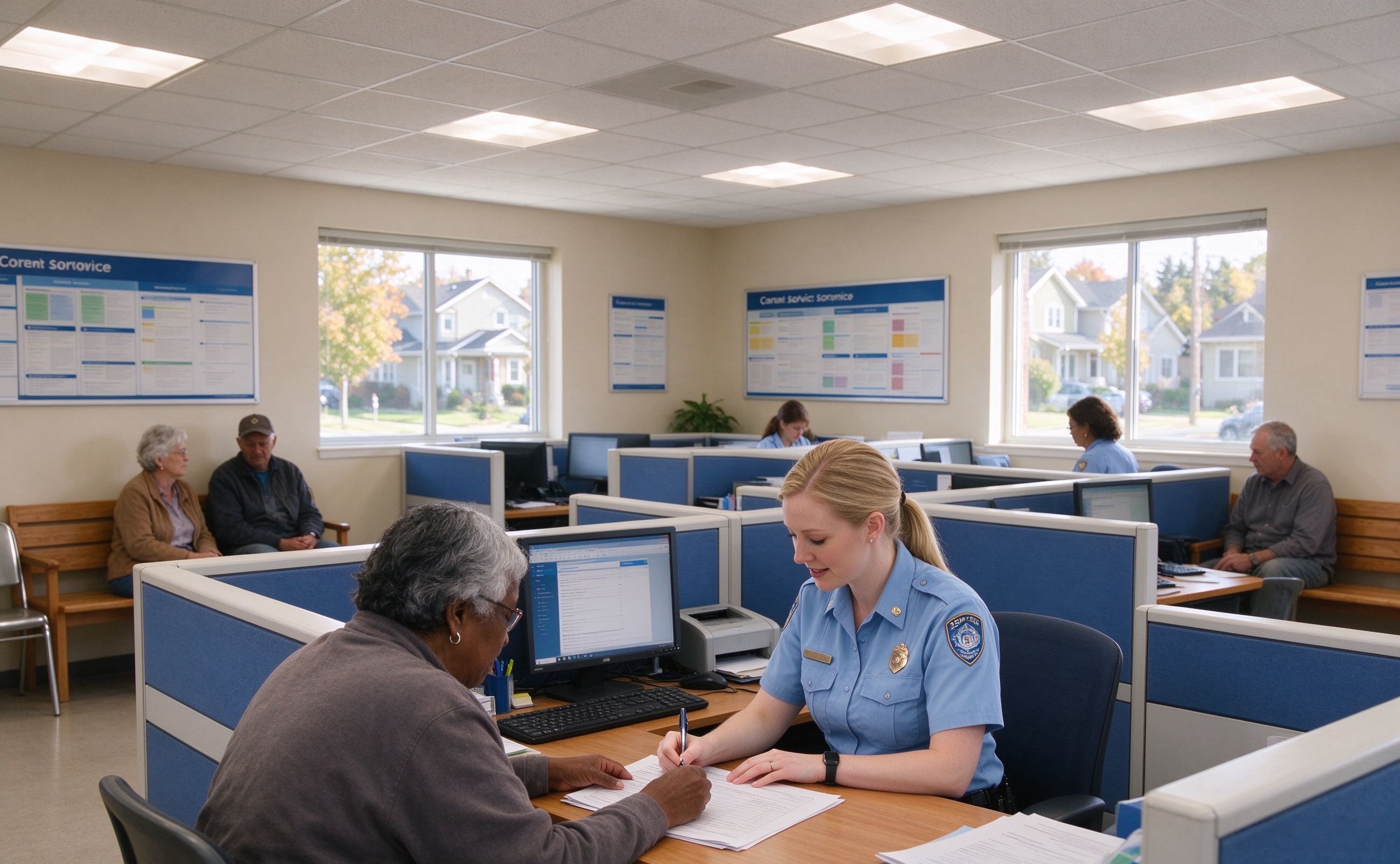
Community Service Station
Rural Government Service Agency Point

Bank Government Service Window