Hazardous Material Escort Robot










Building Momentum, Empowering an Intelligent Internet of Everything | RACETEC Showcases at OpenHarmony Ecosystem Conference 2026
On August 28, 2026, the OpenHarmony Ecosystem Conference 2026, themed "New Smart Connectivity, New Future," was successfully held at the Shenzhen Convention and Exhibition Center (Futian). Hosted by the Global Intelligent IoT Consortium (GIIC) and organized by HarmonyOS Ecosystem Services (Shenzhen) Co., Ltd., the event brought together representatives from government agencies, industry organizations, research institutes, and enterprises to exchange views on strategic consensus, ecosystem mechanisms, standards development, and industry practice — jointly exploring how the OpenHarmony ecosystem can move from technological innovation to large-scale deployment.

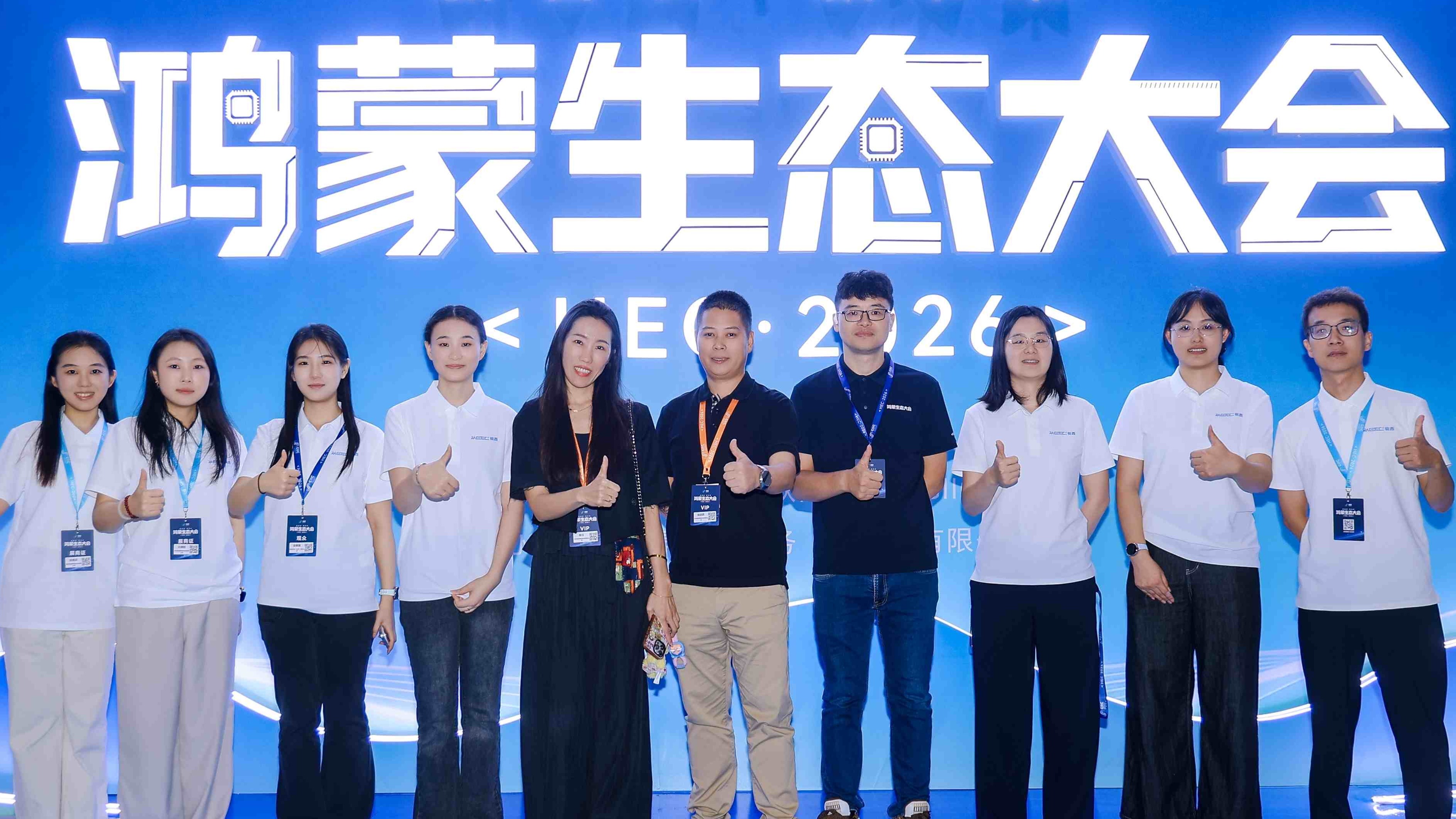
As a GIIC member and a member of the OpenHarmony Ecosystem Promotion Committee, RACETEC was invited to attend, led by General Manager Xu Jinwu. The company deeply participated in co-building ecosystem standards and sharing industry practice, and showcased its "OpenHarmony + AI" digital-intelligent solutions at the OpenHarmony Transportation sub-forum and the accompanying exhibition area.
Standards as the Foundation: A Shared Base for Ecosystem Scale-Up
As the OpenHarmony ecosystem accelerates into thousands of industries, unified technical specifications, collaboration mechanisms, and talent systems have become essential support for scaled growth. The main conference released a series of standards covering app evaluation, development capability, and device interconnection.
Among them, the Requirements for Evaluating OpenHarmony App Functional Completeness centers on "cross-platform benchmarking," establishing a complete framework around app classification, functional breakdown, completeness quantification, and evaluation processes — providing a unified quantitative yardstick for OpenHarmony app functional completeness. The OpenHarmony Ecosystem Kit Series Standards unify development specifications to reduce redundant adaptation and development costs for developers, supporting interoperability and reuse across ecosystem apps.
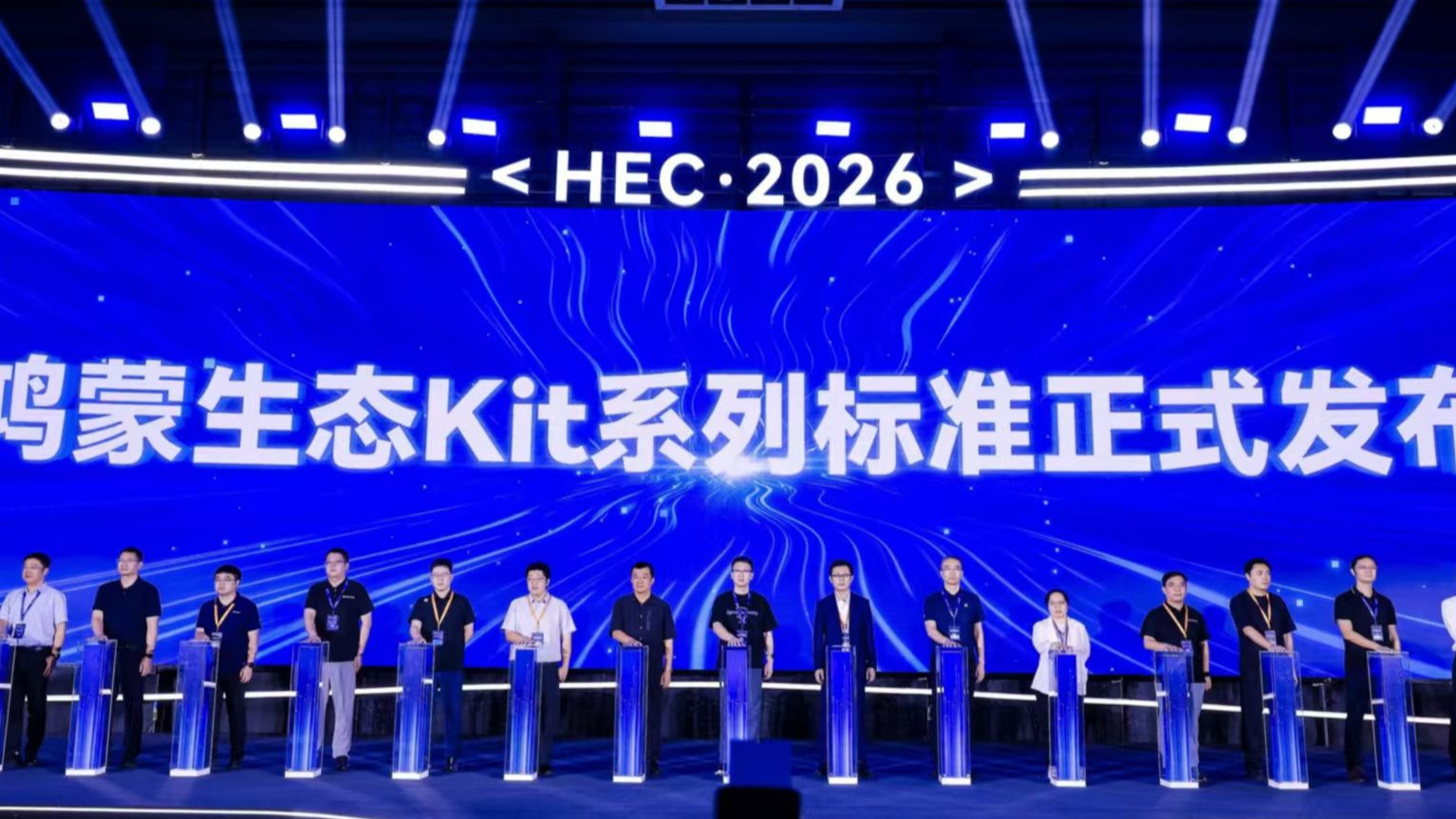
At the standards release ceremony, as a drafting organization of both the App Functional Completeness Requirements and the Ecosystem Kit Series Standards, RACETEC was represented by CTO Huang Shun, who joined other guests onstage to officially launch the standards and witness their rollout.
Going Real: Taking OpenHarmony into the Transportation Industry
A living ecosystem is ultimately measured in real scenarios. On the afternoon of August 28, the OpenHarmony Transportation Sub-Forum, themed "OpenHarmony as the Foundation, Mobility Toward the New — Building a New Smart Transportation Base for the Greater Bay Area," was held in the Shuixian Hall of the convention center. It gathered transportation authorities and industry, academic, and research partners across the Greater Bay Area to explore how the OpenHarmony digital foundation can enable large-scale deployment of smart transportation.
Regulation of dangerous goods road transport is now at a policy inflection point — shifting from "manual, people-based monitoring" to "technology-based prevention and intelligent control": industry guidelines now encourage smart equipment, mandatory national standards have upgraded active-safety equipment from "optional" to "standard," and the "Dongying model" of electronic escort has been promoted nationwide. Combined policy momentum keeps building, and the capacity of the underlying digital platform now sets the ceiling of regulation. Drawing on its deep integration of OpenHarmony and AI, RACETEC was invited to share its intelligent supervision practice for dangerous goods transport at the sub-forum.
At the forum, Dr. Yang Longzhi delivered the keynote "From Manual Monitoring to Tech-Driven, Intelligent Control — How OpenHarmony + AI Is Rebuilding the Intelligent Supervision Foundation for Dangerous Goods Transport." He noted that the traditional "manual monitoring" model has hit a triple ceiling: risks invisible in real time, rigidly rising costs of manual escort, and fragmented information across departments. With the policy turning point now here, whoever builds the intelligent supervision foundation first takes the initiative in safety governance.
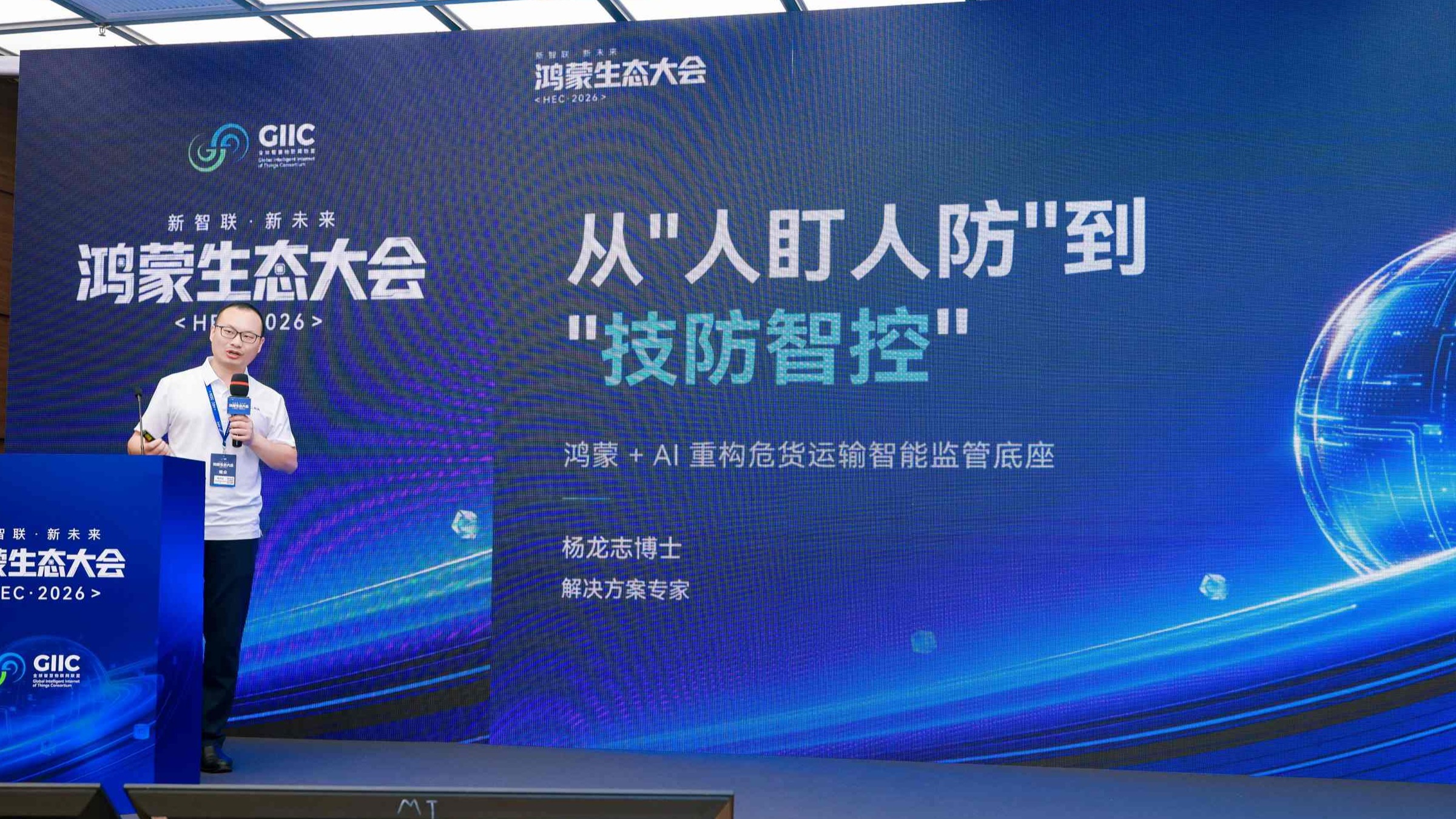
Addressing these bottlenecks, Dr. Yang presented RACETEC's "1+1+N" dynamic control system for dangerous goods transport, built on OpenHarmony: one platform hosting four core engines — dynamic supervision, command and dispatch, information publishing, and analysis and judgment; one terminal unifying vehicle, personnel, equipment, and task management; and a solution starting from dangerous goods transport and extending to school buses, cash-in-transit, logistics, and engineering vehicles.
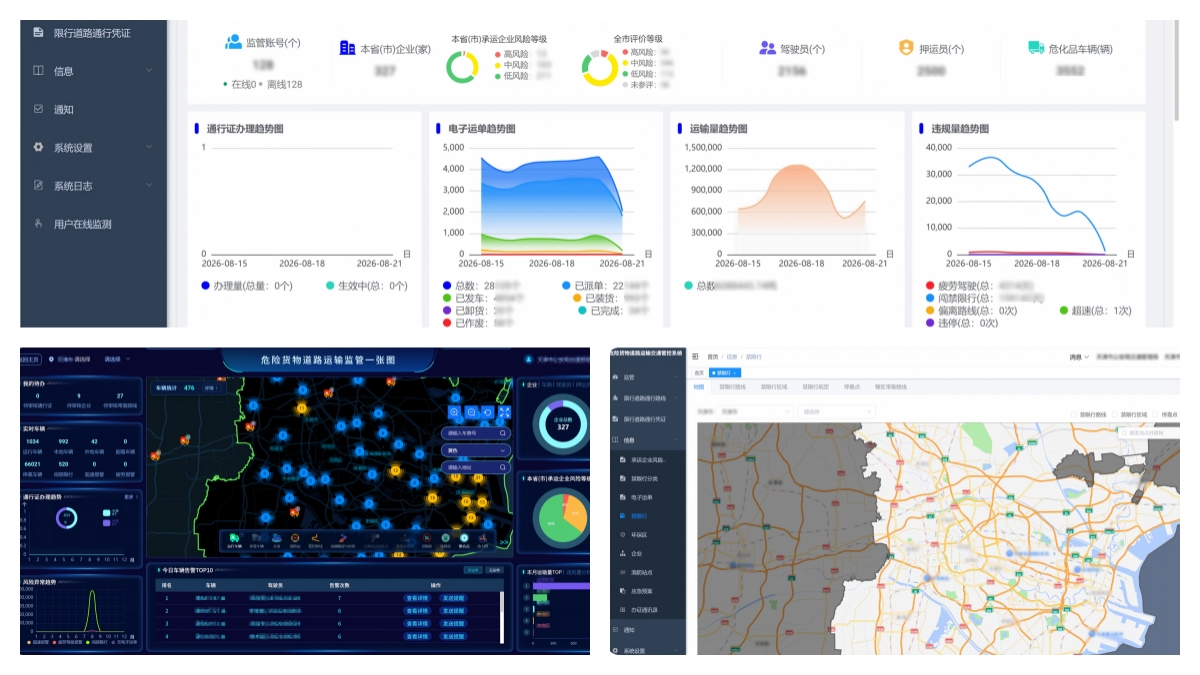
The system forms an end-to-end, self-controlled supervision network: smart onboard terminals connect to the vehicle's original OBD/CANBus, collecting real-time data on "people, vehicles, cargo, and environment." Data travels over a 4G/5G VPDN wireless private network without touching the public internet, protected by zero-trust architecture with end-to-end encryption throughout. It converges into a supervision platform covering pre-, during-, and post-trip processes, with domestic deployment support. Today, the system is deployed at scale at a provincial-level dangerous goods transport traffic-safety supervision platform in Southwest China, delivering routine dynamic supervision of tens of thousands of dangerous goods vehicles and real-time processing of millions of dynamic data points per day — driving a marked drop in local dangerous goods transport accidents.
On the Ground: Three Products Unveiled at the OpenHarmony Transportation Booth
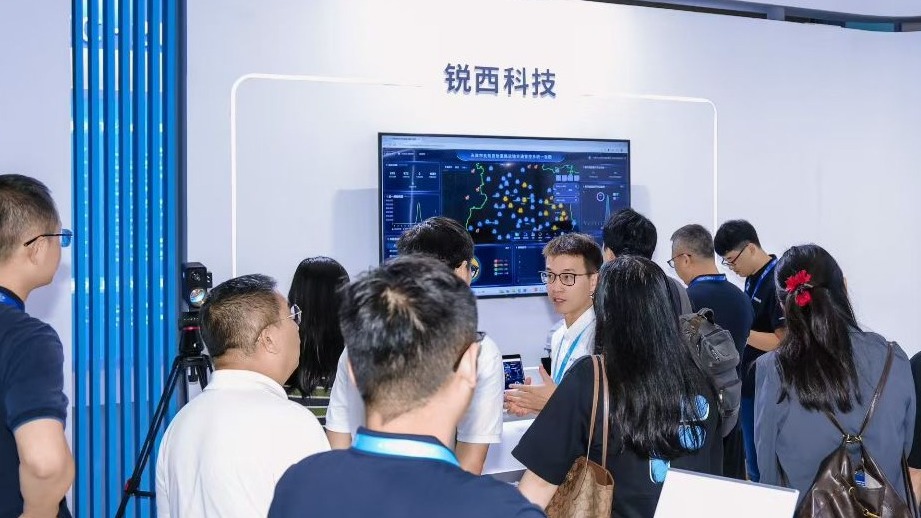
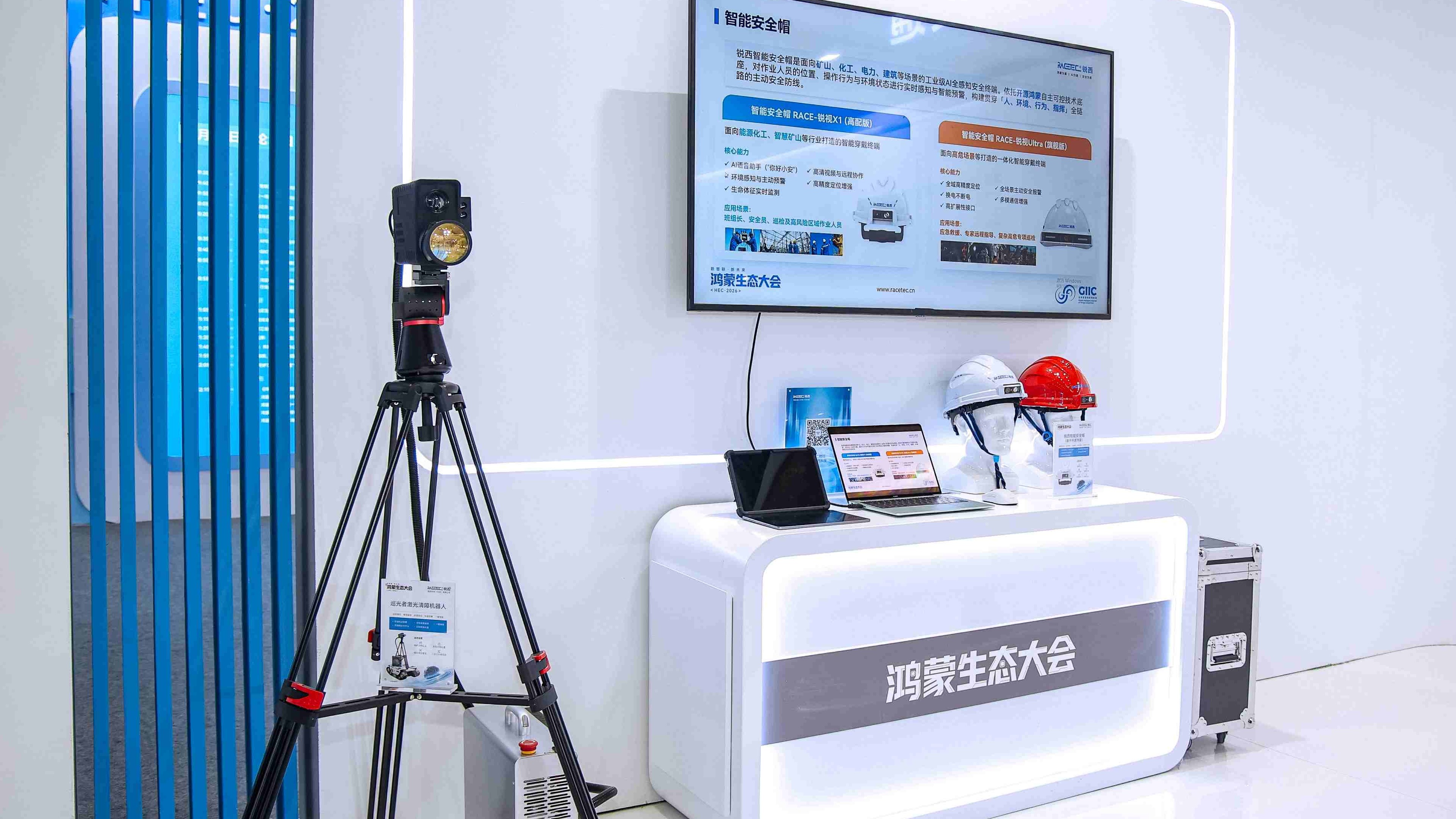
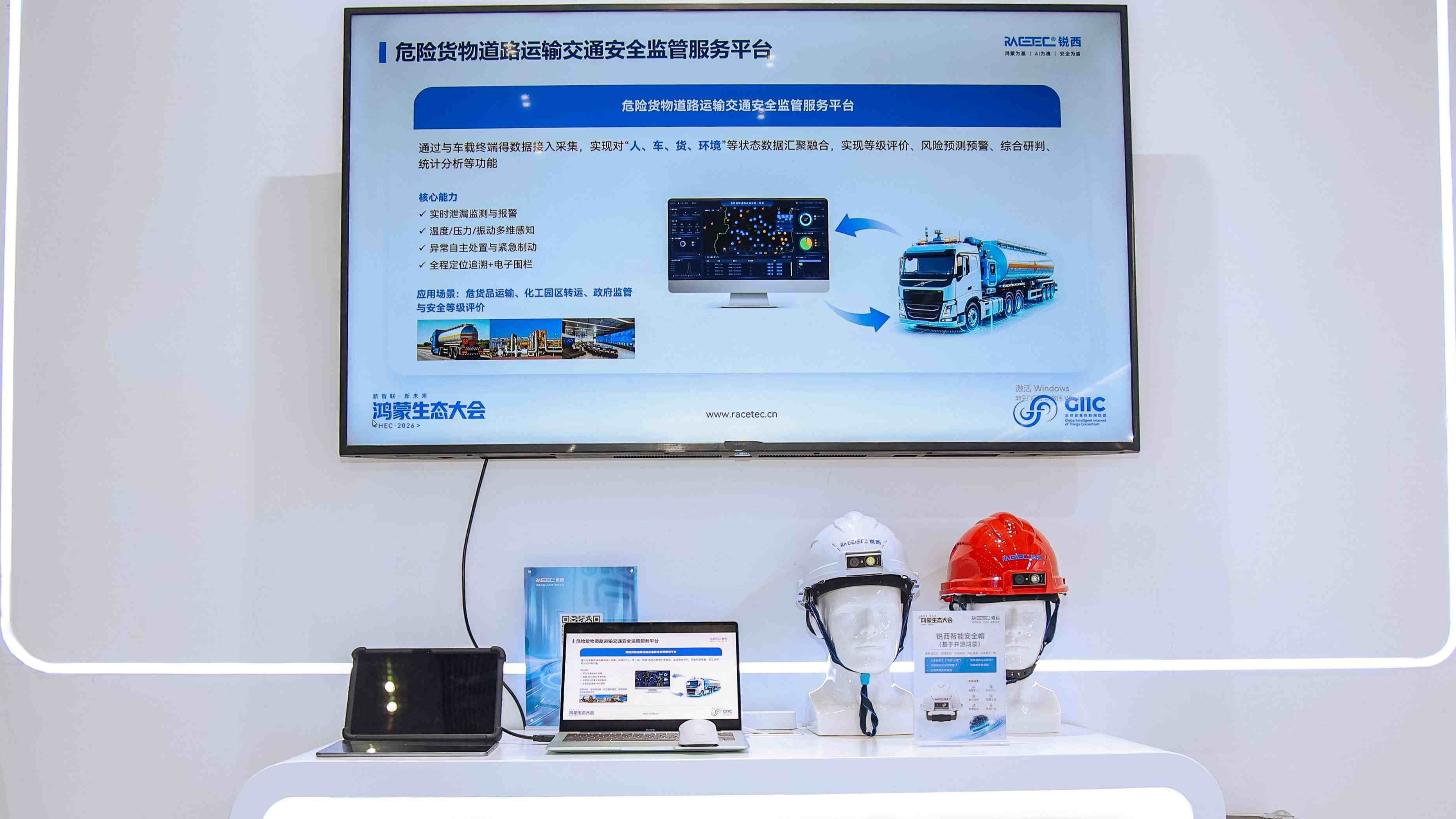
During the conference, RACETEC spotlighted three products: the smart hard hat, the Xun Guangzhe Laser Clearing Robot, and the Dangerous Goods Road Transport Traffic Safety Supervision and Service Platform — drawing on-site demos and in-depth exchanges from visiting guests.
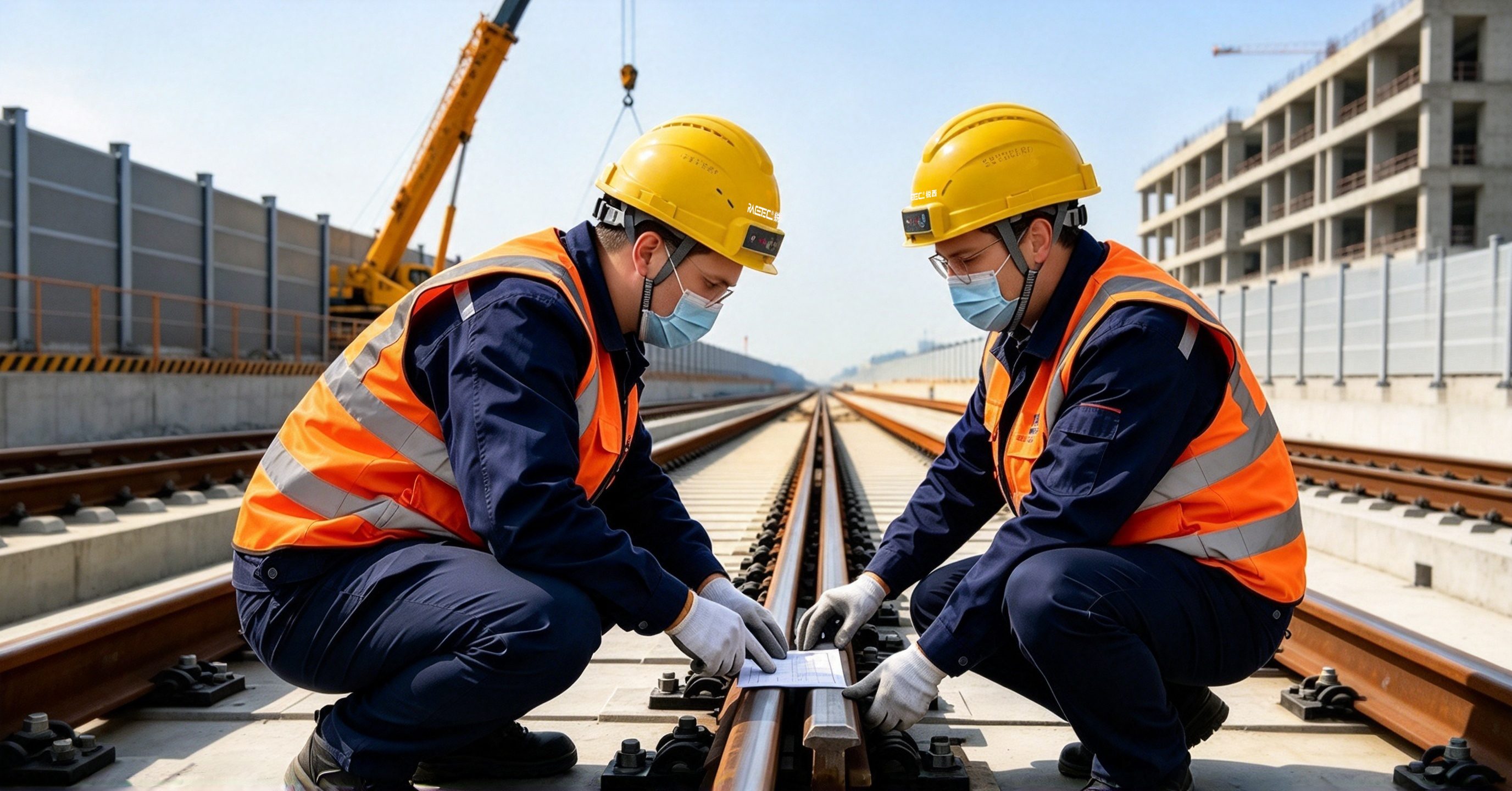
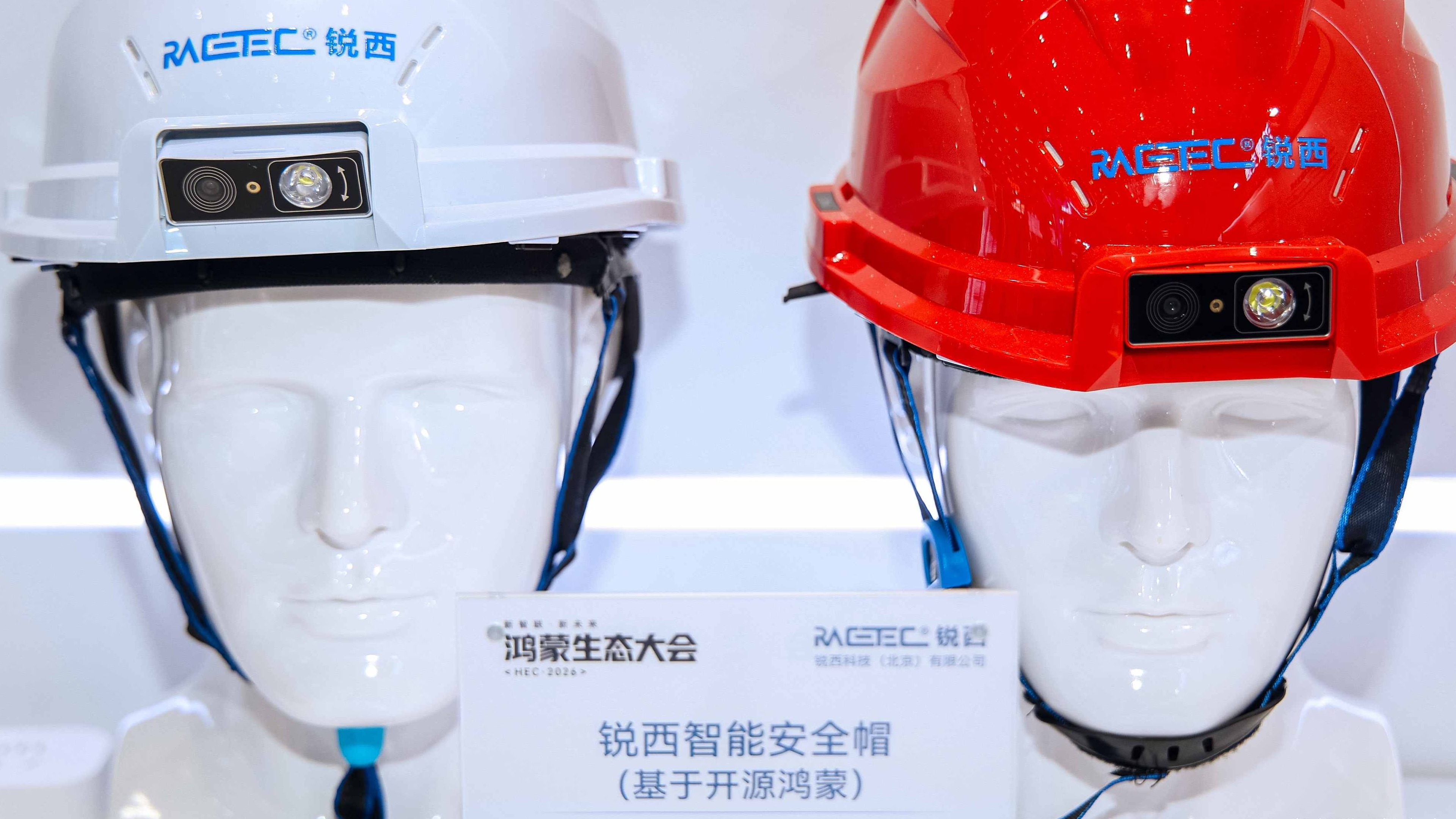
The RACETEC smart hard hat is an industrial-grade, fully AI-perceived safety terminal for mining, chemical, power, and construction scenarios. Built on a self-controlled OpenHarmony foundation, it integrates an AI voice assistant, environmental sensing and proactive warning, real-time vital-signs monitoring, HD video, and remote collaboration — sensing workers' location, operational behavior, and environmental conditions in real time and building an active safety defense line across the full chain of "people, environment, behavior, and command."
The Xun Guangzhe Laser Clearing Robot is an intelligent work platform for overhead foreign-object removal on power grids and specialized remote disposal. With remote precision cutting, autonomous path planning, and multi-link video feedback, it replaces traditional high-altitude manual work through an intrinsically safe design of zero tower climbing, zero power outage, zero electric shock.
The Dangerous Goods Road Transport Traffic Safety Supervision and Service Platform integrates data from onboard terminals to fuse "people, vehicles, cargo, and environment" status data, providing graded assessment, risk prediction and warning, comprehensive judgment, and statistical analysis — serving dangerous goods transport, chemical park transfer, and government supervision.
Built on OpenHarmonyOS · Driven by AI · Guarded by Safety
At a pivotal stage where the OpenHarmony ecosystem moves from technical validation to large-scale deployment, RACETEC upholds its business strategy of "Built on OpenHarmonyOS · Driven by AI · Guarded by Safety." Anchored in the deep integration of OpenHarmony and artificial intelligence, the company works with industry-chain partners on scenario co-creation, advancing the large-scale rollout of homegrown, secure digital-intelligent solutions across transportation, government, energy, and chemicals — safeguarding the steady digital-intelligent transformation of critical industries.
Share