Hazardous Material Escort Robot












Client Background
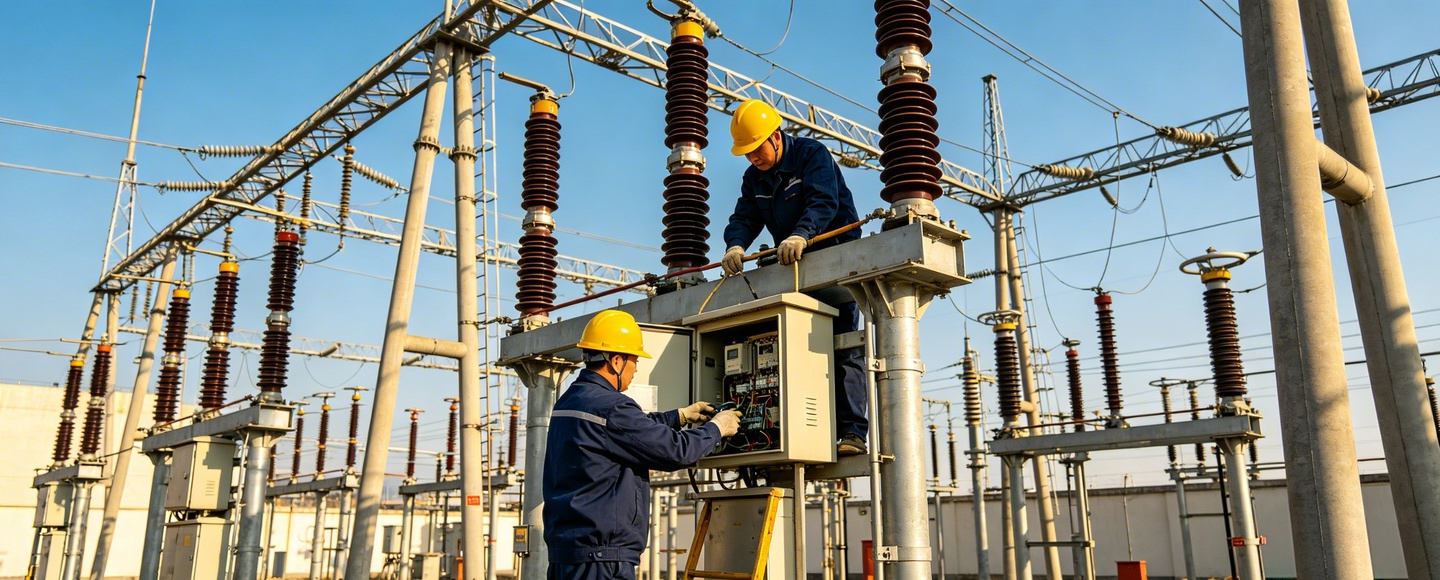
A large power grid company operates multiple high-voltage substations where inspection operations demand stringent safety clearance requirements. The traditional "manual guarding + person-to-person monitoring" model struggles to balance efficiency and safety — there is an urgent need for technology-based solutions to achieve proactive safety protection.
Core Challenges
High-Voltage Electric Shock Risk
Difficult Critical Area Access Control
naccurate Inspector Positioning
Passive Supervision Mode
High-Voltage Electric Shock Risk
Specific Pain Points

High-voltage energized equipment is densely packed; inspectors may inadvertently enter dangerous clearance zones with a moment's inattention, posing high electric shock risk.
RACETEC Solution

Leveraging proximity warning capabilities, audible-visual alarms trigger the moment inspectors approach dangerous clearance distances — forcibly eliminating accidents at the budding stage.
Difficult Critical Area Access Control
Specific Pain Points
Critical areas such as GIS rooms and main transformer zones require strict access restrictions; traditional physical fences are costly to manage and inflexible.
RACETEC Solution
Based on precise geofencing control capabilities, virtual fences are set up in critical areas; alarms trigger immediately upon unauthorized personnel entry, achieving precise access control.
naccurate Inspector Positioning
Specific Pain Points
Substations have dense equipment and many metal structures; indoor positioning drift is severe, making inspection arrival rates difficult to verify.
RACETEC Solution
Based on Beidou high-precision positioning capabilities, stable and accurate positioning is maintained even in dense equipment environments; inspection trajectories are traceable and arrival rates are quantifiable.
Passive Supervision Mode
Specific Pain Points
Traditional "person-watching" supervision relies on post-incident tracing; safety hazards are difficult to intervene in a timely manner.
RACETEC Solution
The supervision model is upgraded from "person-to-person monitoring" passive defense to "pre-incident prevention"; leveraging coordinated linkage between proximity warning and geofencing, safety management evolves from passive response to proactive prevention.

Value Delivered
From Physical Fences to Electronic Control
Previously, critical areas relied on physical fences and manual guarding — costly and inflexible. After deploying Smart Hard Hats, geofences are set up in critical areas such as GIS rooms and main transformer zones; alarms trigger immediately upon unauthorized entry, achieving precise access control.
From Passive Detection to Proactive Warning
Previously, inspectors approaching high-voltage energized equipment relied entirely on experience to judge distances. After deploying Smart Hard Hats, proximity warnings trigger audible-visual alarms the moment dangerous clearance distances are entered — electric shock risks are proactively blocked.
From Vague Searching to Precise Positioning
Previously, positioning drift was severe in dense metal equipment environments, making inspection arrival rates difficult to verify. After deploying Smart Hard Hats, Beidou high-precision positioning remains stable in complex environments — inspection trajectories are traceable and arrival rates are quantifiable.
From Walkie-Talkie Shouting to Remote Collaboration
Previously, experts could not see on-site conditions and had to guide operations solely through verbal descriptions — inefficient and error-prone. The Smart Hard Hat's real-time HD video transmission and two-way voice communication let remote experts be "virtually present" while frontline workers get instant answers. Complex operations now have oversight, guidance, and backup support.