Hazardous Material Escort Robot










Client Background
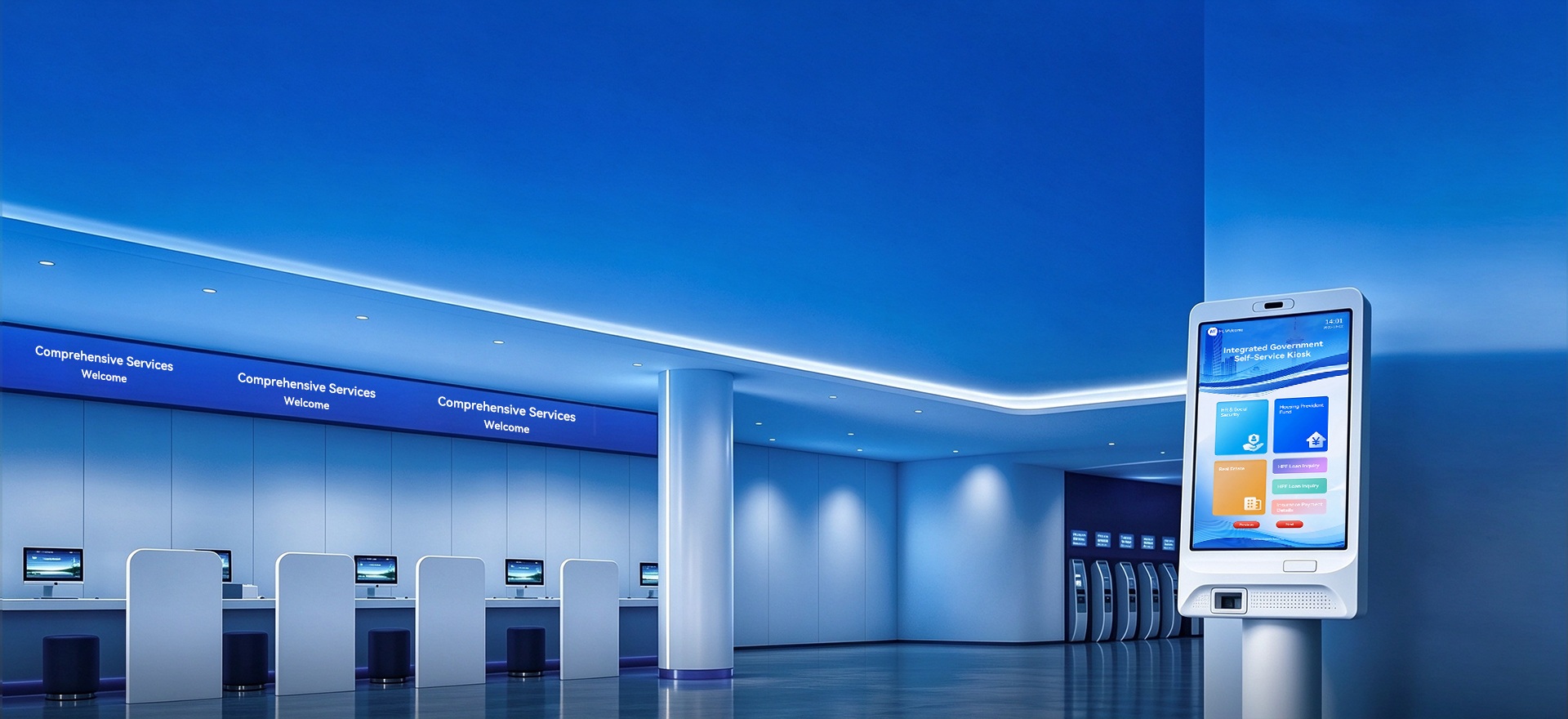
The municipal government service hall handles high-frequency government services citywide. Constrained by window layout, service model, and staffing, it has long faced practical pressures: overcrowded waiting areas, repeated material returns and revisions, overburdened window staff, and suboptimal public service experiences.
Core Challenges
Cross-Departmental Material Silos
Low Counter Communication Efficiency
High Form-Filling Error Rate
Insufficient Grassroots Service Coverage
Cross-Departmental Material Silos
Specific Pain Points

Citizens must repeatedly submit paper materials across different windows or devices; data is not synchronized, and business cannot continue across terminals — resulting in "multiple trips, repeated filling."
RACETEC Solution

Distributed Soft Bus · One-Time Material Submission
Based on the HarmonyOS Distributed Soft Bus and NearLink technology, materials are uploaded once and synchronized across devices at up to 1 Gbps. Multi-terminals interconnect, with real-time synchronization of forms and records — breaking down device barriers and achieving "one submission, multi-terminal sharing."
Low Counter Communication Efficiency
Specific Pain Points
Physical barriers at traditional counters hinder smooth communication; manual assistance relies on verbal descriptions that are prone to misunderstandings, lacking real-time visual aids — resulting in poor citizen experiences.
RACETEC Solution
"Shoulder-to-Shoulder" Desk-Style Collaborative Terminal
Using domestic terminals, screens are shared in real time with support for two-way annotation and voice interaction. Staff and citizens operate "side by side" for precise assistance — breaking down physical and psychological barriers and significantly boosting service satisfaction.
High Form-Filling Error Rate
Specific Pain Points
Manual form filling is time-consuming and error-prone; non-standard formats or logical errors frequently lead to application rejections, requiring citizens to make multiple trips for revisions.
RACETEC Solution
AI Smart Form-Filling Engine · Real-Time Compliance Verification
Integrating with the government middle platform for automatic field pre-filling (core information fully matched), with a built-in million-entry government knowledge base for real-time error correction. Supporting multi-modal input such as handwriting and voice, error rates are significantly reduced — achieving "first-time pass."
Insufficient Grassroots Service Coverage
Specific Pain Points
Government services are concentrated in halls, making it difficult for residents in communities and remote areas to access services; offline environments cannot process applications, leaving "last-mile" blind spots.
RACETEC Solution
Lightweight Terminal Deployment Downward · Offline Cache Processing
Convenience service terminals are deployed to communities and subdistricts, supporting the vast majority of high-frequency services. With offline cache capability, operations work even without network and automatically sync upon reconnection — truly achieving "service at your doorstep."

Value Delivered
One-Time Material Submission, Multi-Terminal Sharing
Previously, citizens applying for one service had to visit multiple windows and repeatedly fill out the same materials, with no data sharing between windows. Now, based on the HarmonyOS Distributed Soft Bus, materials uploaded once are synchronized across devices; citizens submit at one window and other windows automatically retrieve them — transforming from "multiple trips, repeated filling" to "one submission, end-to-end sharing."
Counter Communication, Desk-Side Collaboration
Previously, services relied on verbal descriptions through glass; citizens couldn't explain clearly, staff couldn't hear fully, and material issues bounced back and forth. Now, with real-time screen sharing on domestic terminals, both parties view and operate the same screen, with two-way annotation and voice interaction — transforming from "shouting through glass" to "face-to-face collaboration."
Form Filling, First-Time Pass
Previously, manual form filling was time-consuming and laborious; one mistake meant starting over, requiring citizens to queue repeatedly and make multiple trips. Now, AI automatically pre-fills key fields, verifies format and logic in real time, and recognizes multi-modal input such as handwriting and voice — transforming from "filled then rejected, rejected then revised" to "filled correctly the first time, approved on the first try."
Grassroots Services, Right at Your Doorstep
Previously, government services were concentrated in halls; residents in communities and remote areas had to travel long distances and queue for hours, and areas with unstable networks simply couldn't process applications. Now, lightweight terminals are deployed to communities and subdistricts, with offline processing available and automatic sync upon reconnection — transforming from "travel far, rely on luck" to "services right at your doorstep."